
Why more reading comprehensions won't fix comprehension
I introduced the approach to phonics in four schools. I set it up, resourced it, ran the training or brought it in, first as a literacy lead, then as a deputy, then across two headships. I bought into it completely. I still do.
And every time, a year or two on, I watched the same thing. Children who could decode beautifully, who sailed through the phonics screening check, sitting with a book and not really getting it. The words came out. The meaning didn't.
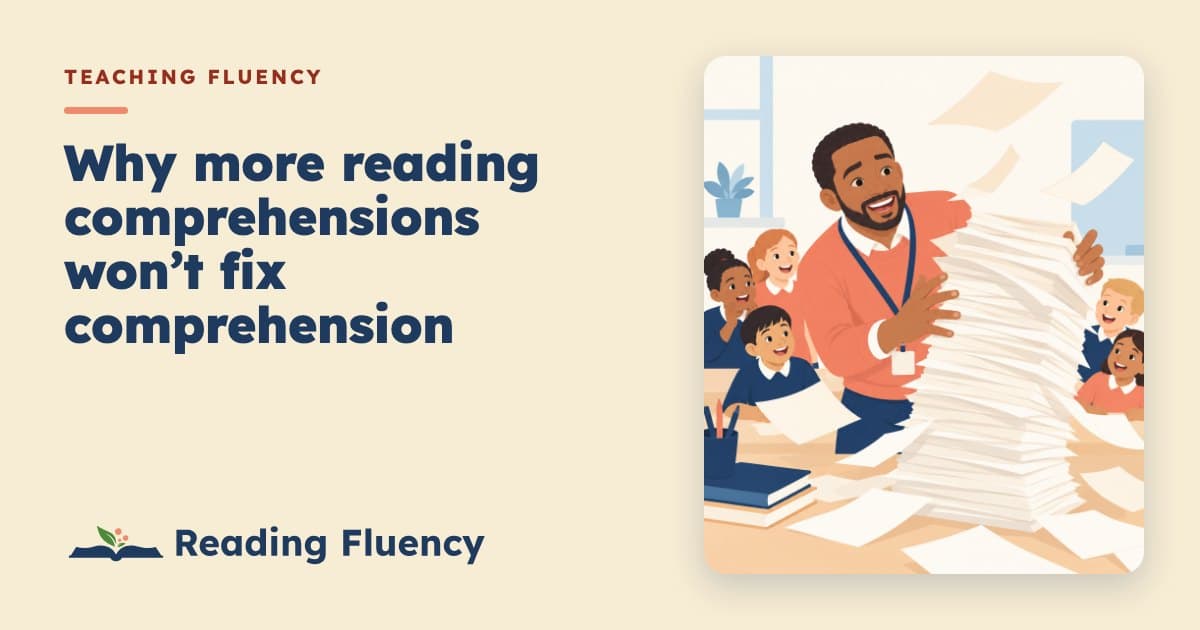
I know the standard response, because I've done it myself. When I prepared Year 6 classes for their reading SATs, we did a lot of comprehension practice. How to find information in a text. How to structure an answer. How to spot what a question was really asking. And it worked, in the narrow sense that mattered in May. Scores went up.
But I want to be honest about what that was. I wasn't teaching those children to read better. I was teaching them to pass a reading test. Those are not the same thing, and the gap between them is the whole reason ReadingFluency exists.
Do written comprehension exercises teach comprehension?
Mostly, no. They test it. And often they don't even do that well.
What my Year 6s got better at was the format. Locating an answer, phrasing it for the mark scheme, recognising a question type they'd seen before. Useful for the paper in front of them. Close to useless a year later when the scaffolding was gone and they met a text nobody had prepped them for.
Daisy Christodoulou's work on assessment draws the line I wish I'd seen sooner: the things that measure learning and the things that cause it are not the same, and we confuse them constantly. A comprehension question is a measure. We have spent twenty years treating it as a method. I spent a good few of those years doing exactly that, in good faith, because it moved the number that mattered.
The research backs the discomfort. A large meta-analysis by Hansford and colleagues found that comprehension interventions look impressive when tested with assessments that mirror the teaching, then lose a big part of their effect under standardised measures. Children get better at the comprehension task you drilled. Not at reading. They learn the format, exactly as my Year 6s did.
Ofsted said as much in its 2024 English subject report. In the schools where test-style questions had become the main method, inspectors found that teachers over-use reading comprehension questions and that this does not build pupils' reading fluency. That's not a blog writer's provocation. That's the inspectorate, drawing on visits to 50 primary and secondary schools, telling us the worksheet habit isn't working.
If not comprehension exercises, then what?
This is where it gets interesting, because comprehension turns out not to be a single thing you can teach directly at all.
David Didau puts it bluntly: reading comprehension isn't one teachable skill. It emerges when fluency, vocabulary, background knowledge and inference fire together. You can't isolate "comprehension" and drill it, any more than you can teach "being good at football" without touching a ball. What you can do is build the things underneath it.
The most neglected of those things is fluency. Not speed for its own sake. Fluency in Rasinski's sense: accurate reading, at a natural pace, with prosody, the expression and phrasing that show a child is grouping words into meaning as they go. A child reading word by word in a flat line is spending nearly all their mental effort on the mechanics. There's almost nothing left over to build meaning. Fluency is what frees up that capacity.
Rasinski's research makes fluency the bridge between decoding and understanding. It's the missing middle. Phonics gets a child to the words. Comprehension is what happens once they arrive. Fluency is the road between the two, and it's the bit we've been leaving to chance.
Why does reading aloud matter so much?
Because comprehension is built by the things written comprehensions skip entirely.
Think about what a child never does on a worksheet. They never hear the text modelled by a fluent reader, so they never learn how it's meant to sound. They rarely read it aloud themselves, so they never practise turning print into meaningful speech. And they're never taught to chunk a sentence into phrases, so they keep reading one word at a time, which is the very thing that starves comprehension.
Modelled reading, reading aloud, phrase building. None of that lives in a comprehension exercise. All of it lives in fluency work. When I read a passage to a class with full expression, then they read it back, then they perform it, they are doing the actual cognitive work that understanding requires. They hear where the meaning sits. They feel where a sentence breathes.
Here's the part that surprises people. It's also far more enjoyable, for them and for you. A worksheet is a quiet, joyless transaction. Reading a poem aloud together is the opposite. My Year 1s spent a week on "My Brother's Socks." By the end they performed it as a class, no help from me, and they held the pause before the last line so well that the hook properly landed. A room of five and six year olds, timing a comic beat together because they understood exactly what the poem was doing. You don't get that from a worksheet. And the engagement isn't a nice side effect. Engagement is part of how comprehension gets built, because a child who is enjoying a text is attending to it in a way no worksheet can buy.
So what should a reading lead actually do?
Start by being honest about what your comprehension lessons are really doing. If they're assessing rather than teaching, that's fine, as long as you know that's what they are. Just don't expect them to move the thing they're measuring.
Then shift some of that time into fluency. Model texts aloud. Have children read aloud, not just silently. Teach them to read in phrases rather than word by word. Use short, rich texts, poems are perfect, that a child can return to across a week until it's theirs. This is lighter than a comprehension carousel, not heavier, which matters when you're already stretched.
I'm not telling you to throw comprehension out. I'm telling you that the thing you've been asked to do more of is the thing least likely to help, and the thing that would help most is the one almost nobody plans for. I spent years introducing phonics because I believed decoding mattered. I still do. But decoding was only ever meant to get children to the door. Fluency is what walks them through it.
If you want to know where your readers actually are on that journey, the first step is to measure the bit in the middle. Most schools assess decoding and comprehension and skip fluency entirely, which is exactly the gap struggling readers fall into. Measure it, teach into it, and watch what happens to the understanding you were trying to drill all along.
Tags:

Stay in the loop
Weekly reading fluency insights from a serving headteacher. No spam, just practical strategies for your school.
Related Articles
The Year 8 Reading Test: Why Primary Schools Should Care
The government has announced a statutory Year 8 reading test assessing fluency and comprehension. The children it will measure are in your school now, and the gap it will find is set long before Year 7.
Repeated reading: the technique everyone knows and nobody enjoys
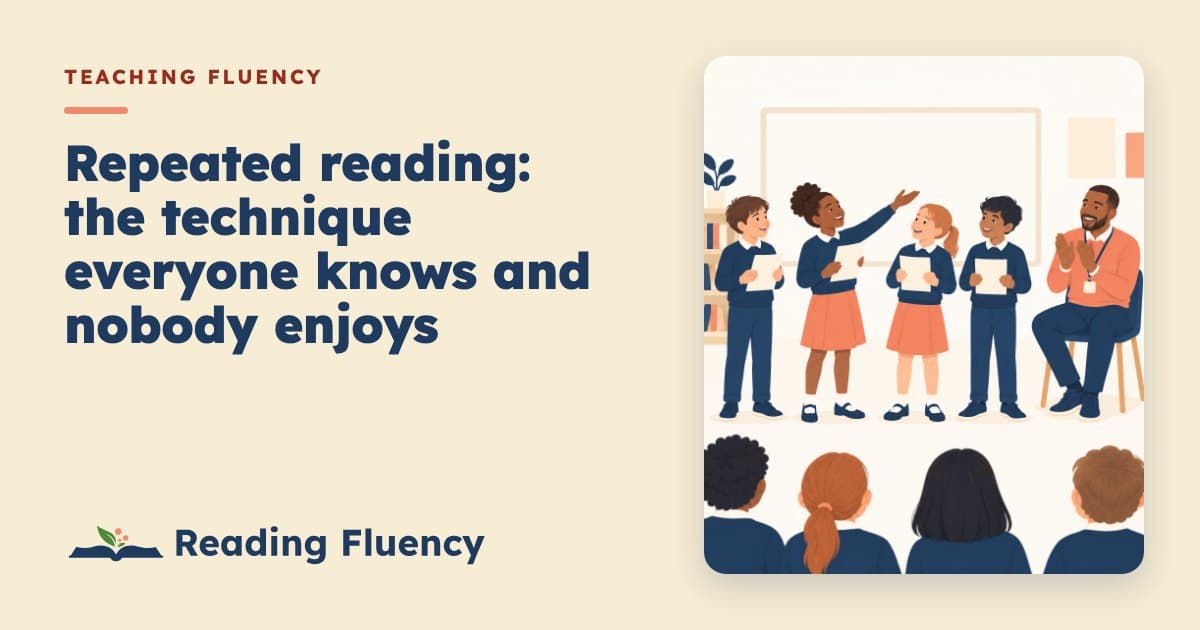
Repeated reading is the most evidenced fluency technique there is, and the most boring as usually taught. The fix: hide the repetition inside a week of varied, purposeful tasks with a performance at the end.
Your phonics results look great. So why is reading still hard work for some children?
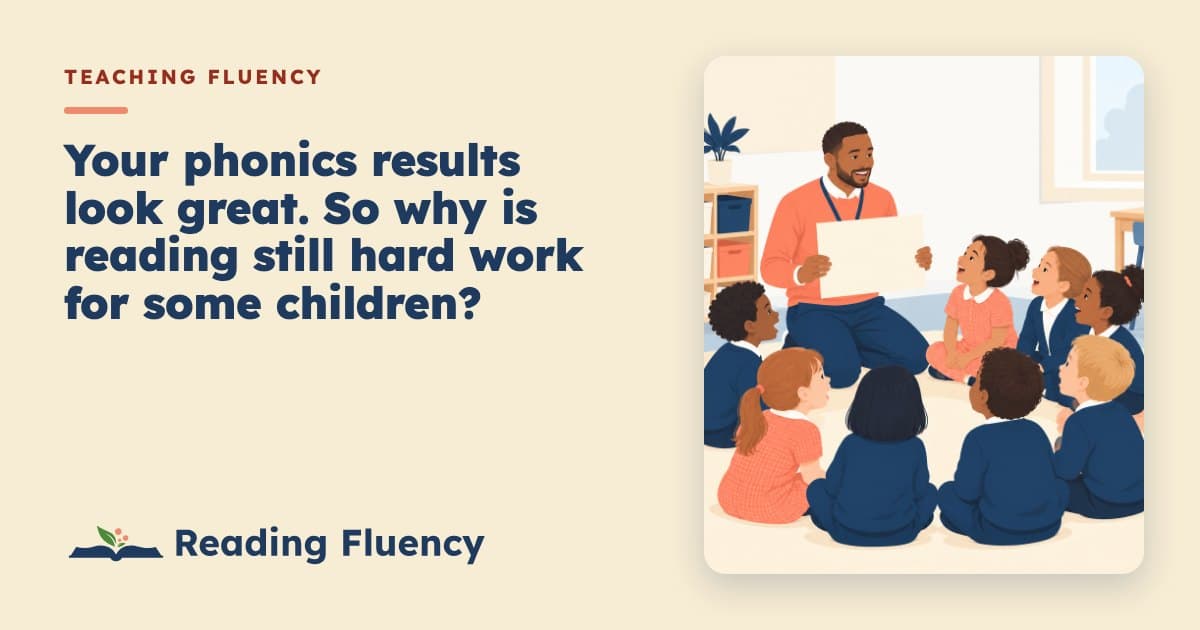
Passing phonics proves a child can decode. It does not prove they recognise words instantly, and until they do, reading stays hard work. Here is the automaticity gap, the research behind it, and the flash phrases routine we use at Fetcham to close it.